
Umicore Opens ‘Zilverbos’ Green Buffer and New Connecting Road at Hoboken Site in Belgium
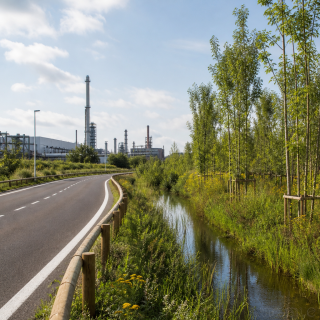
On 27 October 2026, Umicore officially inaugurated the ‘Zilverbos’ green buffer zone and a new connecting road at its Hoboken site in Belgium, representing a significant achievement in the integration of industrial operations with urban environments. This development is not only a testament to advanced spatial planning and civil engineering but also a model for how industry and community can coexist through thoughtful infrastructure and environmental design. The project demonstrates how multidisciplinary engineering can address longstanding challenges at the intersection of heavy industry and residential life, all while prioritising safety, sustainability, and collaboration with local authorities.
Reimagining the boundary between industry and community
The Zilverbos green zone acts as a structural and ecological buffer between Umicore’s industrial operations and the Moretusburg residential area. The green belt is more than a visual screen; it is a carefully landscaped area that both physically separates and aesthetically transforms the interface between the plant and the neighbourhood. The project’s name, ‘Zilverbos’ (Silver Forest), is a nod to the site’s industrial heritage—‘de Zilver’ being the local nickname for the plant—while simultaneously signalling a new era of ecological awareness and community integration.
This green space is designed to mitigate the impacts of industrial activity by reducing noise, improving air quality, and providing a natural transition between the factory and the homes nearby. The creation of Zilverbos is a direct response to the need for safer, healthier living conditions for residents, while maintaining the operational continuity of a major industrial employer. By embedding a green buffer into the urban fabric, Umicore and its partners have set a precedent for how legacy industrial sites can be reimagined to coexist with dense urban populations.
Engineering safer and more efficient mobility
Complementing the new green space, Umicore, in partnership with the City of Antwerp and the Hoboken district, has developed a new connecting road stretching approximately two kilometres between Moretusburg and Hemiksem. Scheduled to open for public use on 16 November 2026, this road represents a significant improvement in both mobility and safety for the area. The design features a four-metre-wide segregated two-way cycle path, which provides a dedicated and secure route for cyclists and pedestrians, physically separated from both industrial and public vehicular traffic.
This new infrastructure addresses longstanding concerns about the mingling of industrial and public traffic, which previously shared routes through the area. The closure of the section of Adolf Greinerstraat that ran through the industrial site, and its incorporation into Umicore’s operations, further enhances safety by eliminating unnecessary crossings between heavy vehicles and local residents. The new road and cycle path not only improve logistics for the plant but also encourage sustainable modes of transport and safer urban movement.
Long-term planning, investment, and stakeholder collaboration
The realisation of Zilverbos and the new connecting road is the product of years of careful planning, negotiation, and investment. Since 2020, Umicore has invested approximately €125 million in these projects, reflecting a deep commitment to both operational excellence and community wellbeing. The project required the acquisition of 186 homes to enable land consolidation and the creation of the buffer zone, with four of these residences preserved and thoughtfully integrated into the new urban landscape.
Such a large-scale transformation is only possible through close collaboration between private industry and public authorities. The City of Antwerp, the Hoboken district, and Umicore worked together to ensure that the infrastructure met the needs of all stakeholders, balancing industrial requirements with urban policy, safety standards, and social considerations. The result is an example of how multi-stakeholder governance can deliver projects that benefit both economy and society.
Technical disciplines and integration challenges
The Zilverbos project brings together a wide array of technical disciplines, from civil and environmental engineering to urban landscape design and traffic planning. Creating an effective buffer zone required landscape architects to work closely with civil engineers to ensure that the green space not only met ecological objectives but also provided real physical separation and risk mitigation. The design and construction of the segregated cycle paths and the re-routing of public and industrial traffic called for advanced traffic engineering and urban planning expertise.
Furthermore, the integration of preserved homes into the new landscape required architectural sensitivity and urban design skills, ensuring that these buildings serve as a bridge between the area’s industrial past and its greener future. The entire initiative highlights the importance of cross-disciplinary collaboration and the ability to manage complex projects that span environmental, technical, and social domains.
Implications for engineers and infrastructure professionals
For engineers, project managers, and technical specialists in Belgium and beyond, the Zilverbos initiative exemplifies the challenges and rewards of working at the intersection of industry, infrastructure, and urban life. It offers a clear case study in how spatial engineering, transport design, and environmental planning can be integrated to deliver projects that support sustainable, liveable cities while maintaining vital industrial activity. The project showcases the skills required in civil engineering, landscape architecture, urban planning, and stakeholder management—disciplines that are increasingly central to modern infrastructure development.
As Zilverbos becomes operational and the new connecting road opens, the Hoboken site will stand as a reference point for future efforts to reconcile industrial productivity with urban quality of life. For those interested in contributing to such transformative projects, explore opportunities in engineering and infrastructure roles in Belgium.
Olivier Lambert | Engineering.jobs
Are you a recruiter or employer? Publish your latest company news and job openings on Engineering.jobs to boost your company’s visibility, strengthen your employer brand and attract your future team members. Access our specialised engineering and IT CV database to find candidates who match your needs. Contact us today to learn more about our solutions.