
Belgium Collaborates with Spain, Germany, and EDA on In-Flight Drone Refuelling Trials
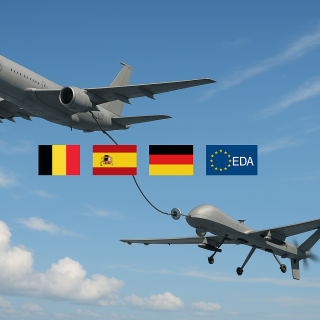
Belgium has taken a significant step forward in the field of unmanned aerial systems by joining Spain, Germany, and the European Defence Agency (EDA) to test in-flight refuelling for drones. This initiative aims to explore new operational capabilities for unmanned aerial vehicles (UAVs), focusing on extending their range and endurance through mid-air refuelling. The collaboration underscores the growing importance of multinational cooperation in advancing defence technology within Europe.
Expanding the operational scope of unmanned aerial vehicles
The ability to refuel drones while airborne represents a major leap in UAV technology. Traditionally, the endurance of drones has been limited by their onboard fuel capacity, restricting their operational range and the duration of their missions. By developing and testing mid-air refuelling techniques, Belgium and its partners are working to overcome these limitations, potentially enabling UAVs to remain in the air for significantly longer periods and to cover greater distances without the need for frequent landings.
This technological advancement is particularly relevant for military and strategic applications, where persistent surveillance, extended reconnaissance missions, and rapid redeployment are essential. The project also highlights the increasing role of drones in modern defence operations, where autonomy, flexibility, and endurance are critical factors.
Joint European effort led by the European Defence Agency
The European Defence Agency has played a central role in bringing together the expertise and resources of Spain, Germany, and Belgium for these trials. The EDA acts as a facilitator for collaborative defence projects among European Union member states, aiming to strengthen the collective capabilities of the EU’s armed forces. By working together, the participating countries can share knowledge, reduce duplication of effort, and accelerate the pace of technological innovation.
The in-flight refuelling tests are designed to address both technical and operational challenges. These include developing reliable refuelling systems compatible with various UAV platforms, ensuring safe and secure transfer of fuel during flight, and integrating these capabilities into existing command and control structures. The results of the trials will inform future development and potential deployment of such systems across European defence forces.
Technical and engineering challenges in mid-air refuelling
Implementing mid-air refuelling for drones involves complex engineering considerations. The process requires precise coordination between the refuelling aircraft and the receiving UAV, advanced guidance and control systems, and robust safety protocols to manage the risks associated with fuel transfer at altitude. Engineers and technical specialists from Belgium and the partner countries are contributing their expertise in aeronautics, avionics, and systems integration to address these challenges.
Moreover, the integration of in-flight refuelling capabilities must account for interoperability between different drone models and refuelling platforms. This demands a high level of technical standardisation and cross-border collaboration, which the EDA is well positioned to facilitate. The project serves as a practical example of how European defence cooperation can drive technological progress and operational effectiveness.
Implications for engineering careers and future defence projects
The participation of Belgium in these trials highlights the country’s commitment to advancing its defence technology sector and contributing to European security initiatives. For engineers and technical professionals, the project illustrates the diverse skill sets required in modern defence programmes, including systems engineering, aeronautical design, software development, and project management. The collaborative nature of the initiative also demonstrates the value of international teamwork and knowledge sharing in tackling complex technological challenges.
As the results of the in-flight refuelling tests become available, they are expected to inform the next generation of UAV development and operational concepts within Europe. The experience gained by Belgian engineers and defence specialists will position them at the forefront of emerging technologies in unmanned systems. For those interested in contributing to such innovative projects, opportunities can be explored via the latest engineering and technology roles in Belgium.
This collaborative effort between Belgium, Spain, Germany, and the EDA marks a significant milestone in the evolution of European defence capabilities, setting the stage for further advancements in unmanned aerial technology and multinational cooperation.
Olivier Lambert | Engineering.jobs
Are you a recruiter or employer? Publish your latest company news and job openings on Engineering.jobs to boost your company’s visibility, strengthen your employer brand and attract your future team members. Access our specialised engineering and IT CV database to find candidates who match your needs. Contact us today to learn more about our solutions.