
Simera Sense Unveils Edge and Cloud AI Processing Strategy for Satellite Imaging
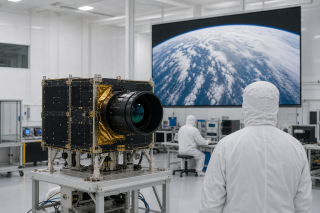
Simera Sense, a company at the forefront of optical payload solutions for small satellites, has announced a bold new strategy to integrate artificial intelligence (AI) at both the edge and in the cloud for its Earth observation systems. This initiative, revealed on 20 June 2024, is positioned to transform how satellite imagery is captured, processed, and delivered, promising to make Earth observation data more timely, relevant, and actionable for a broad spectrum of industries.
Pioneering AI Integration in Satellite Imaging
Traditionally, satellites collect vast amounts of raw data and transmit it to ground stations for post-processing and analysis. This workflow can be both time-consuming and bandwidth-intensive, often resulting in delays before actionable insights reach users. Simera Sense's new approach aims to disrupt this model by embedding AI capabilities directly within its optical payloads—a process known as edge processing—while also leveraging the scalability of cloud-based AI analytics once data arrives on Earth.
Edge AI processing allows satellites to analyze and filter data in real-time, identifying and extracting valuable information before transmission. This can dramatically reduce the volume of data sent to ground stations, optimizing bandwidth usage and enabling much faster delivery of relevant results. Meanwhile, cloud-based AI platforms provide the computational power needed for deeper analysis on larger datasets and facilitate easy access to advanced analytics for end users. By combining these two approaches, Simera Sense intends to streamline the entire data pipeline, from image capture in orbit to delivery of processed insights to customers.
Technical Advancements for Small Satellite Platforms
Simera Sense specializes in developing medium to high-resolution optical payloads for nanosatellites, cubesats, and other small satellite platforms. These compact systems are increasingly vital for Earth observation missions, offering cost-effective and flexible solutions for monitoring the planet. The company's new strategy involves integrating sophisticated AI algorithms into these payloads, enabling on-board tasks such as image enhancement, object detection, change monitoring, and data filtering.
This capability is particularly valuable for applications that demand rapid response times, such as disaster management, precision agriculture, and environmental surveillance. For instance, a satellite equipped with edge AI could automatically detect areas affected by flooding or wildfires and prioritize the transmission of critical images to emergency responders, significantly reducing the time between event and response. Once the data is on the ground, cloud-based AI tools can further analyze patterns, trends, or anomalies across large geographic areas, supporting more informed decision-making for industries ranging from insurance to urban planning.
Implementing AI in the constrained environment of a satellite presents significant technical challenges. Systems must operate reliably with limited power, processing capacity, and storage, and must withstand the harsh conditions of space. Simera Sense's approach underscores the importance of robust embedded systems engineering, efficient algorithm design, and the ability to balance performance with resource constraints.
Implications for the Space and Earth Observation Industry
The integration of AI into satellite imaging workflows is part of a broader trend reshaping the space and Earth observation sectors. As the volume of data generated by satellite constellations continues to grow, automation and intelligent processing are becoming essential for extracting value from this information. Simera Sense's strategy reflects the industry's shift toward more autonomous, efficient, and responsive satellite operations, where actionable intelligence can be delivered in near real-time.
This evolution is driving demand for new technical skills and expertise. Engineers and IT professionals working in this field must be proficient in embedded systems, machine learning, cloud computing, and data analytics. Designing AI-powered solutions for space applications requires a deep understanding of hardware-software integration, algorithm optimization, and system reliability. There is also a growing need for professionals who can bridge the gap between hardware development and advanced software analytics, ensuring that AI models perform effectively both in orbit and on the ground.
For organizations and individuals involved in satellite technology, the ability to deploy and maintain AI-driven imaging systems will be a key differentiator in the market. The sector is likely to see increased collaboration between aerospace engineers, AI specialists, and data scientists as the boundaries between traditional engineering disciplines continue to blur.
Looking Ahead: The Future of AI-Driven Satellite Data
Simera Sense's announcement marks a significant step forward in the evolution of Earth observation technologies. By integrating AI at multiple stages of the data pipeline, the company is setting a precedent for how small satellite platforms can deliver faster, more relevant, and higher-quality insights to users worldwide. As the demand for timely and accurate geospatial information grows, intelligent processing will play a central role in unlocking new applications and business models for satellite data.
For engineers, IT professionals, and those interested in the technical challenges of space-based AI, this development highlights the exciting opportunities and innovations shaping the next generation of Earth observation systems. The ability to combine hardware ingenuity with advanced software analytics will be at the heart of future progress in this rapidly evolving field.
To explore current opportunities in satellite technology and AI-driven engineering, visit our job page.
Olivier Lambert | Engineering.jobs
Are you a recruiter or employer? Publish your latest company news and job openings on Engineering.jobs to boost your company’s visibility, strengthen your employer brand and attract your future team members. Access our specialised engineering and IT CV database to find candidates who match your needs. Contact us today to learn more about our solutions.