
ENGIE Launches Its First Hybrid Hydrogen and Battery Installation in Belgium
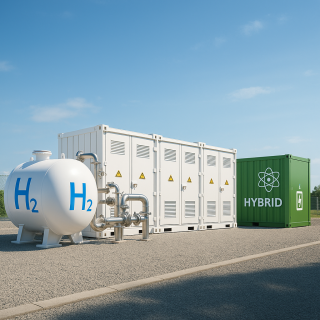
Belgium has marked a new chapter in its journey towards a sustainable energy future with the inauguration of ENGIE’s first hybrid hydrogen and battery installation. This milestone, officially announced in October 2026, signals a growing commitment within the country and across Europe to innovative solutions that enhance the reliability and flexibility of renewable power. The project is not only a technical achievement for ENGIE but also a demonstration of how evolving energy infrastructure can help meet ambitious climate targets while offering new opportunities for engineers and technical professionals.
Integrating hydrogen and battery storage for a resilient grid
The core innovation of ENGIE’s new installation lies in its hybrid approach, which combines hydrogen production with advanced battery storage. This synergy is designed to address one of the most pressing challenges in renewable energy: the intermittent nature of sources like wind and solar. By using surplus renewable electricity to produce hydrogen through electrolysis, ENGIE can store energy in chemical form for extended periods. This hydrogen can later be converted back into electricity or used in industrial processes, providing a flexible resource that complements the rapid-response capabilities of battery storage systems.
Battery storage, on the other hand, offers immediate balancing of supply and demand, helping to stabilize the grid in real time. By integrating both technologies, the installation can respond both to short-term fluctuations and longer-term shifts in energy availability, making it a powerful tool for grid operators and energy planners. This hybrid model is increasingly recognized as a blueprint for future energy systems that must accommodate high shares of renewables while maintaining reliability.
Strategic role in Belgium’s energy transition
The launch of this hybrid installation comes at a time when Belgium is intensifying its efforts to reduce greenhouse gas emissions and transition away from fossil fuels. National and European policies are driving the expansion of renewable energy capacity, but integrating these variable resources into the grid requires new approaches to energy storage and management. ENGIE’s project demonstrates how traditional energy providers can innovate by adopting advanced technologies and integrating them into existing infrastructure.
Hybrid systems like this one enable operators to store excess renewable electricity during periods of low demand and release it when needed, reducing curtailment and maximizing the value of renewable generation. This not only supports Belgium’s climate objectives but also strengthens energy security by reducing dependence on imported fuels. The project sets a precedent for other utilities and industrial players seeking to modernize their operations and contribute to a low-carbon future.
Technical expertise and interdisciplinary collaboration
Behind the success of ENGIE’s hybrid installation is a diverse team of engineers and technical experts skilled in multiple disciplines. The project required deep knowledge of electrochemistry for hydrogen production, advanced power electronics for battery integration, and sophisticated systems engineering to ensure seamless operation. Digital monitoring and control systems play a critical role, enabling real-time management of energy flows and optimizing the interaction between hydrogen and battery assets.
This level of complexity underscores the importance of interdisciplinary collaboration, bringing together chemical engineers, electrical engineers, IT specialists, and project managers. The ability to design, implement, and operate hybrid energy systems is becoming an increasingly valuable skillset as the sector evolves. Professionals with experience in renewable energy technologies, grid management, and automation are well-positioned to contribute to similar projects in Belgium and beyond.
Opportunities and future directions for engineers and IT specialists
ENGIE’s hybrid installation is more than just a technological milestone—it is a signal of the changing landscape for engineering and technical careers in the energy sector. As Belgium and other European countries invest in renewable energy and advanced storage solutions, there is a growing need for professionals who can navigate the challenges of integrating new technologies into complex systems. Skills in project management, digitalization, and systems integration are increasingly in demand, alongside expertise in core engineering disciplines.
For engineers and IT professionals interested in shaping the next generation of energy infrastructure, projects like ENGIE’s offer a glimpse into the future of the sector. These developments not only contribute to sustainability goals but also create dynamic environments for learning and innovation. As the momentum behind hybrid and flexible energy systems builds, the expertise developed in pioneering projects will be essential for scaling up similar solutions across the region.
Those looking to play a role in Belgium’s energy transition and explore new career paths in advanced energy systems can find current opportunities on the Engineering.jobs platform.
Olivier Lambert | Engineering.jobs
Are you a recruiter or employer? Publish your latest company news and job openings on Engineering.jobs to boost your company’s visibility, strengthen your employer brand and attract your future team members. Access our specialised engineering and IT CV database to find candidates who match your needs. Contact us today to learn more about our solutions.